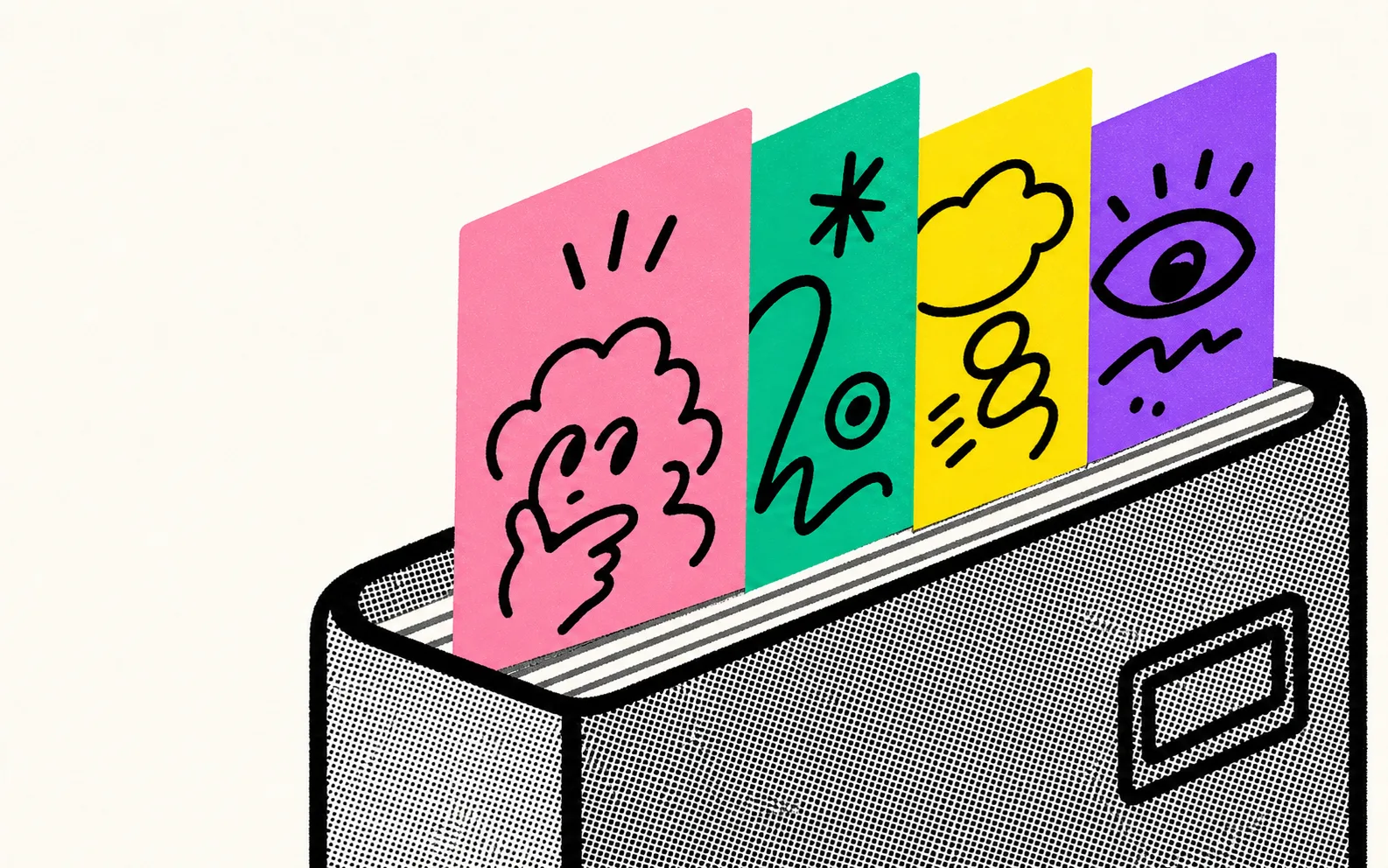
AI Image Knowledge Base
Turning scattered examples, prompts, and methods into searchable, reusable visual knowledge
AI Knowledge System Case / 15
Turn scattered image-generation examples, prompts, and methods into a classifiable, searchable, reusable, and evolving visual knowledge system.
The local knowledge base classifies, deduplicates, curates, and generates Markdown archives across social media, thumbnails, portraits, infographics, posters, interfaces, and comic storyboards, alongside Prompt Master patterns for intent extraction and prompt quality.
Content is organized into local and curated vaults across seven visual task categories.
Includes scripts for classification, curation, Markdown/Wiki generation, and table upload.
The prompt framework emphasizes target tool, nine intent dimensions, focused questions, and success criteria.
A public browsing version is live; third-party examples retain their original licensing and provenance boundaries.
From Saved Images to Callable Knowledge
Saved images alone are hard to reuse: their task, why the prompt worked, and related examples remain unclear. The system classifies by output job, then records examples, prompts, and structural notes in a consistent archive.
Classification and curation scripts provide a first pass while a human-curated vault controls final quality, supporting both scale and a high-quality entry point.
A Knowledge Base Must Guide the Next Creation
Prompt Master decomposes a vague request into task, tool, output, constraints, input, context, audience, success criteria, and examples, asking only when critical information is missing.
The library then answers not only what good examples exist, but how to describe the next task, choose a pattern, and evaluate the result more accurately.
PROCESS
Key Decisions
Organize by job, not just style
Output jobs such as posters, infographics, portraits, and interfaces are more reusable than abstract style labels.
Machine-classify, human-curate
Automation expands coverage while the curated vault preserves a trusted entry point.
Put success criteria in prompts
Prompts describe not only the image, but its use, constraints, and definition of done.
Role & Collaboration
I led taxonomy, curation rules, automation composition, the curated archive, and integration of prompt methods.
AI supported first-pass classification and structuring; I owned retention, naming, provenance boundaries, and reuse judgment.
Validation, Outcome & Reflection
The local system contains category archives, curated Markdown, and generation scripts, with a public browsing version now deployed.
Asset volume does not equal knowledge quality; real creation tasks must still evaluate retrieval and prompt reuse.
A personal knowledge base improves not by saving one more image, but by making the next decision faster and better grounded.