Executive Operations Cockpit
A five-minute view of yesterday's settlement, today's risks, and the decisions that need attention
Business Decision Product Case / 04
Turning fragmented livestream, order, after-sales, private-domain, inventory, and finance data into a decision surface leaders can understand, drill into, and act on in five minutes.
This is not an Excel-to-chart makeover, nor a replacement for ERP or finance systems. It addresses operating definitions, missing-data states, and accountable follow-through: what happened yesterday, what is at risk today, and who needs to act by when.
Designed for business owners, operations leads, finance, supply chain, and private-domain teams; the home view keeps only decision-critical information.
V1 includes a local login-free dashboard and read-only NAS refresh; source spreadsheets are never edited or overwritten.
Livestream sales, returns/after-sales, and historical Douyin Shop orders are connected; finance close, private-domain operations, and daily inventory balances remain pending.
The product separates livestream GMV, net order receipts, and operating contribution profit; missing inputs are shown as pending rather than disguised as zero.
Leaders Need Trusted Definitions, Not More Reports
Operating data was scattered across NAS folders and exported sheets. To understand yesterday's result or today's red flags, the owner had to ask repeatedly and reconcile multiple tables. Livestream GMV could be double-counted with paid orders, while after-sales, inventory, and private-domain teams used different definitions, making apparently precise numbers unreliable for decisions.
The product goal is not more metrics, but three decisions within five minutes: confirm yesterday's settlement, identify today's risks, and enter the issues that need action. Supporting materials, contracts, and assets stay in a resource center rather than competing with operating KPIs.
Decision Model: Settle, Alert, Drill Down
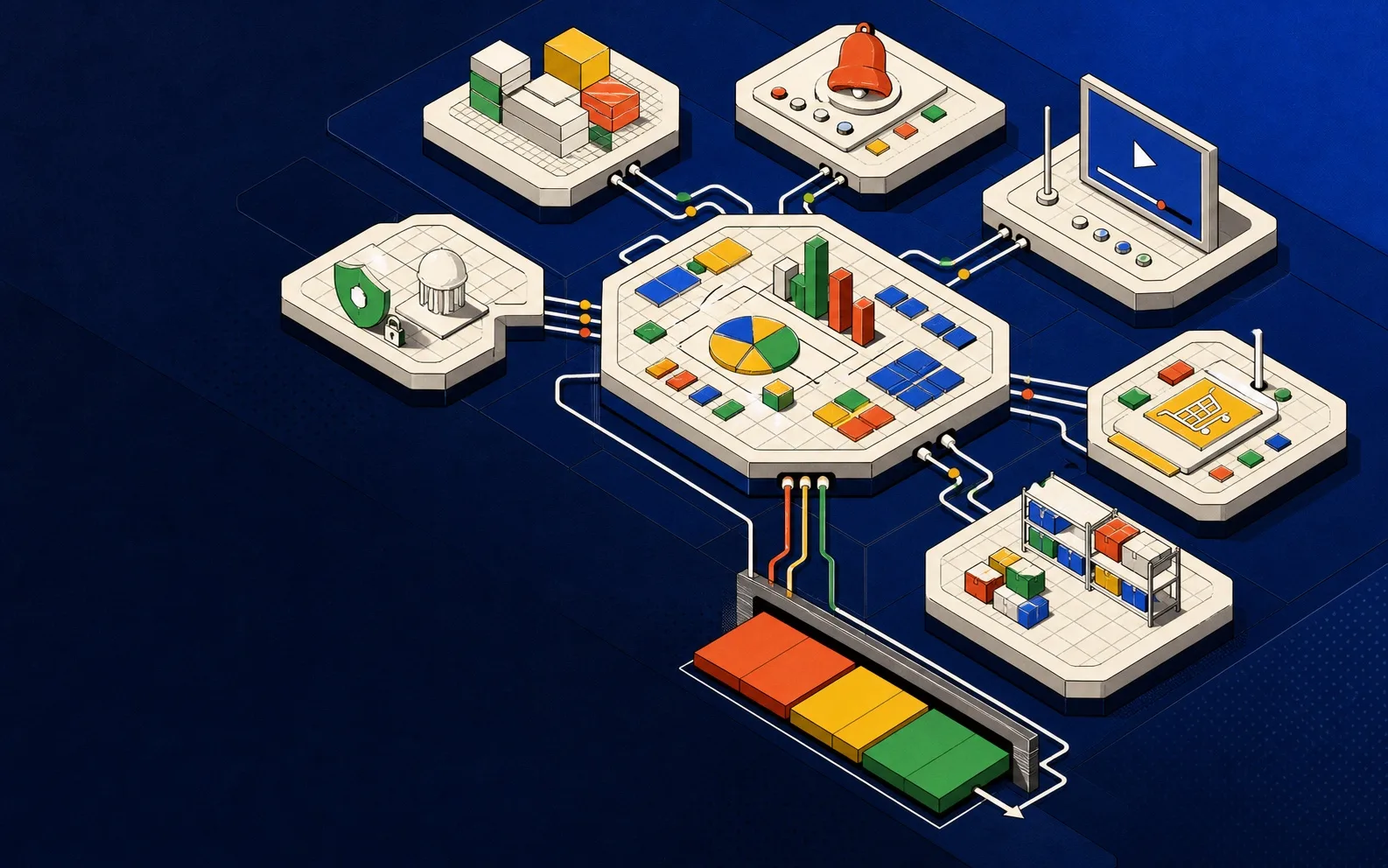
The home view has three layers. Settlement uses net public/private receipts, operating contribution profit, livestream performance, fulfillment rate, and refund rate. Alerts surface today's livestream issues, pending after-sales, inventory risks, and missing sources. Drill-down connects each issue to its responsible module, owner, deadline, and closure state.
Secondary views cover livestreams, order fulfillment and after-sales, WeChat private-domain operations, products and inventory, and supporting resources. A red flag can be traced to a session, order, SKU, or source status instead of ending at an unexplained overview chart.
Missing Data Is an Operating State
Finance close data enters net private-domain receipts and contribution profit only after confirmation. Inventory without a seven-day sales base is not treated as infinite stock. Livestream sessions without ad spend are excluded from the ROI denominator. Every metric has a source, formula, and validity condition.
When orders, finance, or inventory are stale, the interface shows pending, awaiting sync, or awaiting confirmation, while retaining the last successful snapshot and failure reason. The principle is simple: admit uncertainty rather than let a false zero enter executive judgment.
Local and Read-only by Design
On refresh, a local service reads only fixed NAS directories, cleans, aggregates, and deduplicates the data, then creates a desensitized local snapshot. Source files are never modified, renamed, or overwritten; if the NAS is unavailable or a format fails, the last successful result remains visible with the reason.
The dashboard is not exposed publicly, does not upload source spreadsheets, and never displays phone numbers, addresses, passwords, contract text, or attachment contents. In an operating system for a business, privacy and recovery are part of product trust, not back-office details.
PROCESS
Key Decisions
Separate settlement from estimates
Yesterday uses confirmable settlement definitions; today's sales are marked as estimates. Livestream GMV represents front-end performance and is never added again to net order receipts.
Make missingness visible
When critical inputs are missing, the product shows neither fabricated profit nor zero-filled certainty, and reference materials never crowd the operating home view.
Every metric must lead to an action owner
Red, yellow, and green alerts identify not only the issue but its evidence, responsible module, owner, deadline, and closure state.
Keep source data read-only
The cockpit consumes operating data without becoming another data-entry system, preventing the dashboard and NAS ledgers from becoming two competing sources of truth.
Role & Collaboration
I led product and experience: mapping the recurring questions of owners, operations, finance, supply chain, and private-domain teams; defining the home and drill-down architecture; and specifying net receipts, profit, ROI, refunds, fulfillment, inventory, data states, alert thresholds, and NAS mappings.
AI supported engineering implementation, documentation, rule checks, and iteration. I remained accountable for operating definitions, product priority, privacy boundaries, recovery behavior, and final acceptance.
Validation, Outcome & Reflection
The confirmed V1 stage includes a login-free local dashboard, read-only NAS refresh, and ingestion of livestream sales, returns/after-sales, and historical orders. Finance close, private-domain operations, and daily inventory remain incomplete, so the case does not claim those views as fully operational.
Next, the team needs to assign daily export ownership, finance confirmation timing, core SKUs, and the official customer-acquisition-cost definition, then recalibrate alert thresholds after two weeks of continuous operation.
An operating cockpit is valuable only if leaders can act on it. Trusted definitions, explicit missingness, and accountable closure matter more than visually rich dashboards.
The project reinforced a method: define judgment rules and data ownership before automating, or the system will only amplify existing definition problems faster.
DEMO / 04
Product demo video
A 31-second local dashboard walkthrough covering the operating home view, module navigation, and key review paths after data refresh.